
Post Office – strategy to campaign delivery
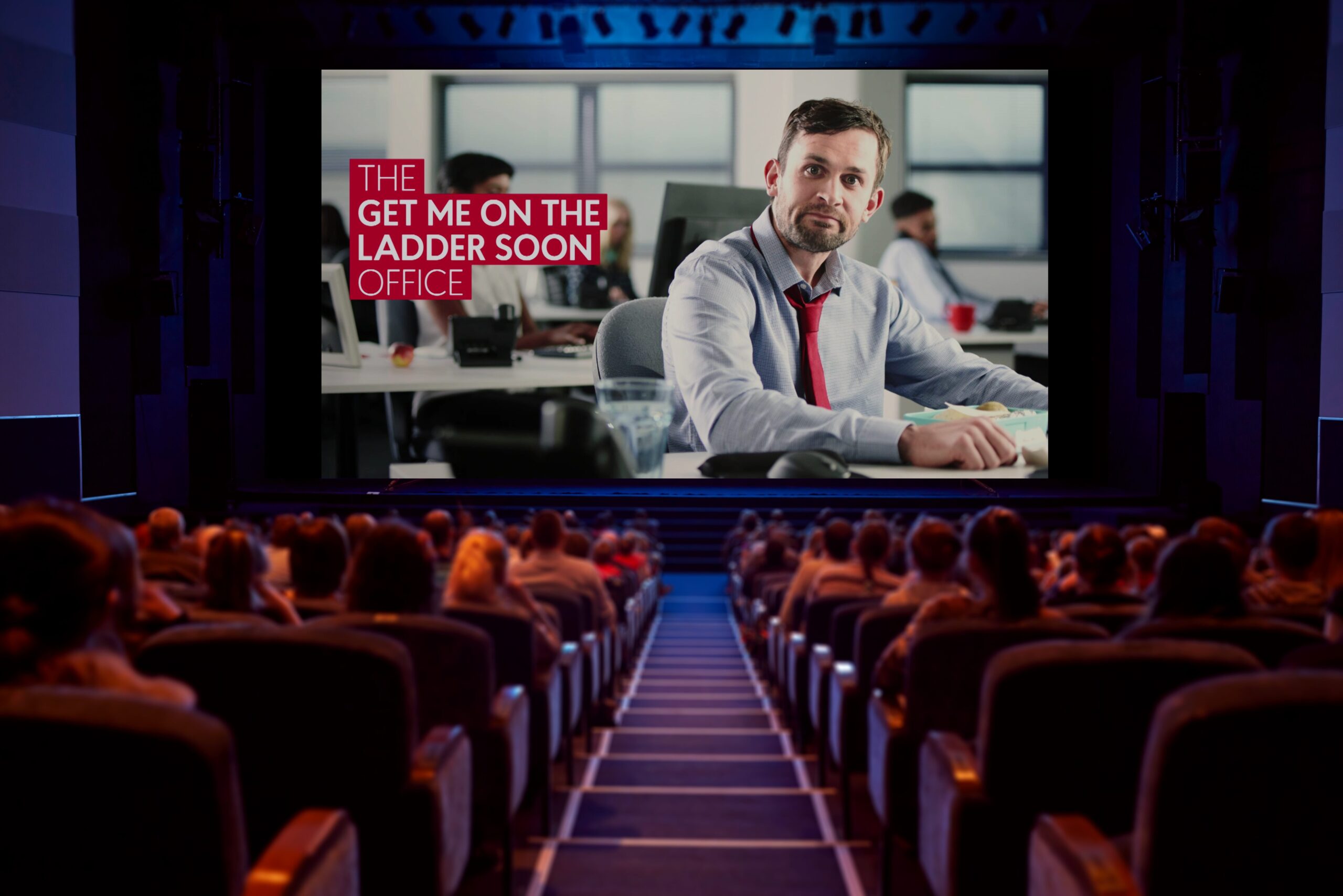
The Challenge
Despite positive sentiment, Post Office was losing relevance, seen as institutional and rooted in the past. They wanted their first brand campaign in four years. A pitch against the incumbent agency.
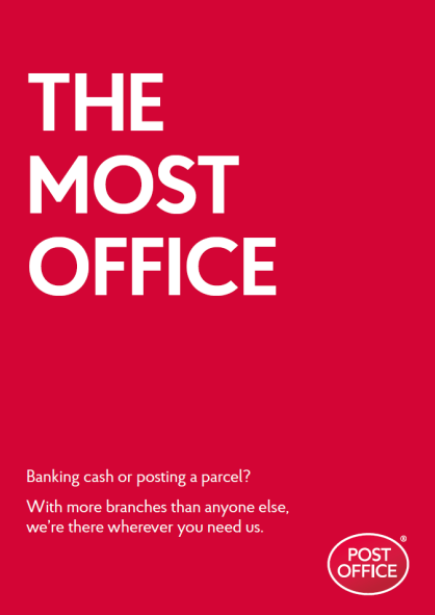
An initial creative idea, THE MOST OFFICE, focused on their presence in local community businesses. The challenge was to turn this into a platform that made the brand feel human and relatable again, strengthening consideration with existing audiences and opening it up to new generations.
The Strategy & Platform
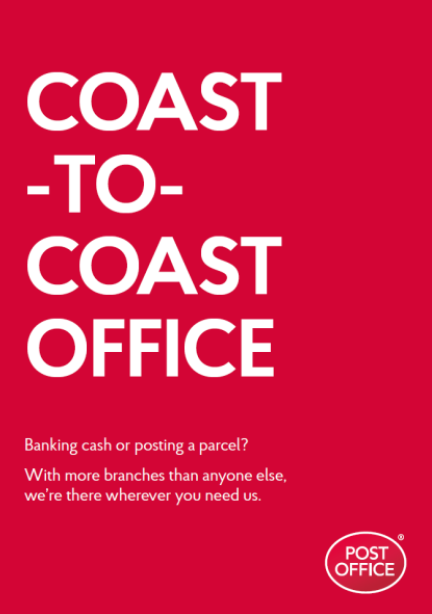
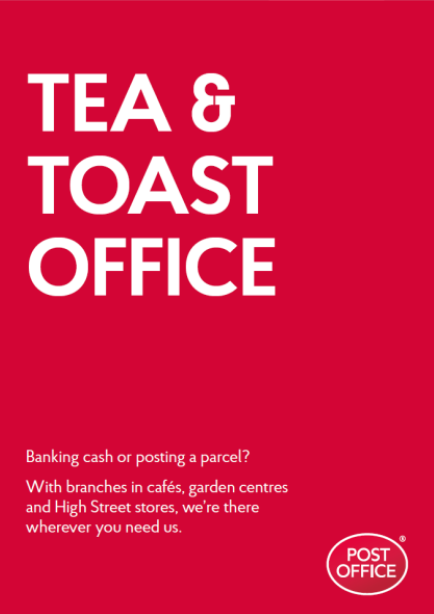
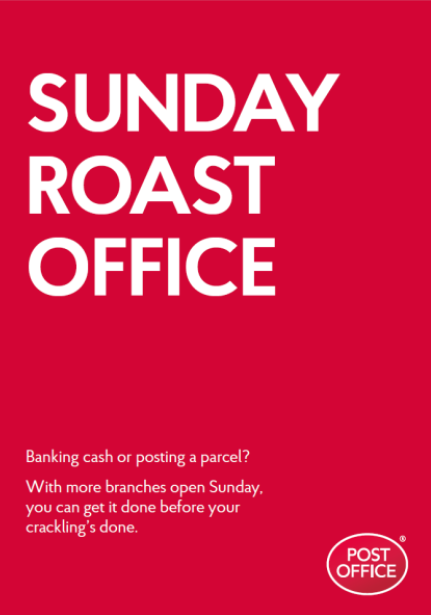
I reframed THE MOST OFFICE from a statement about the brand into a platform rooted in lived experience. By swapping POST for everyday situations, the idea shifted from what it is, to when it matters.
Anchored by Here for what matters, it created a clear role in people’s lives – able to show up with relevance and consistency across different audiences.


The Media Change
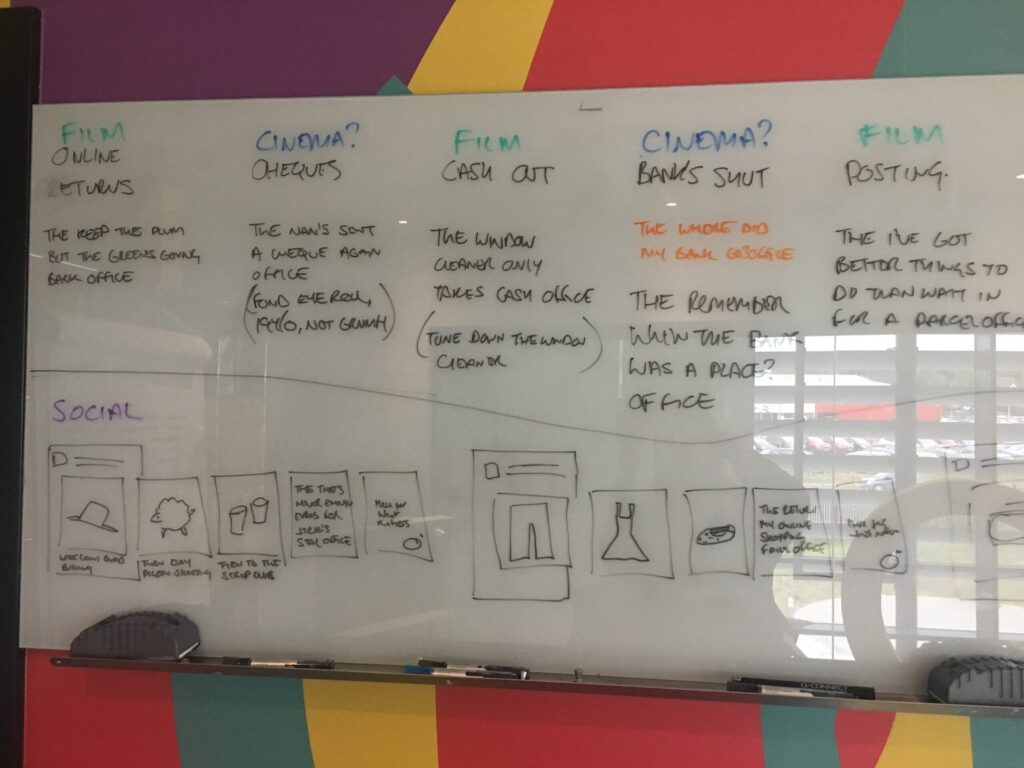
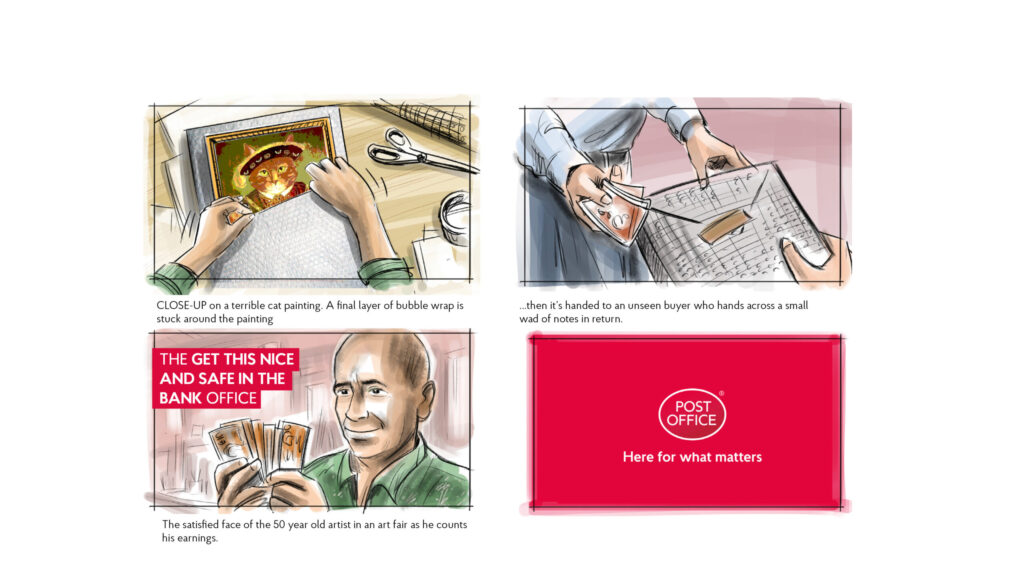
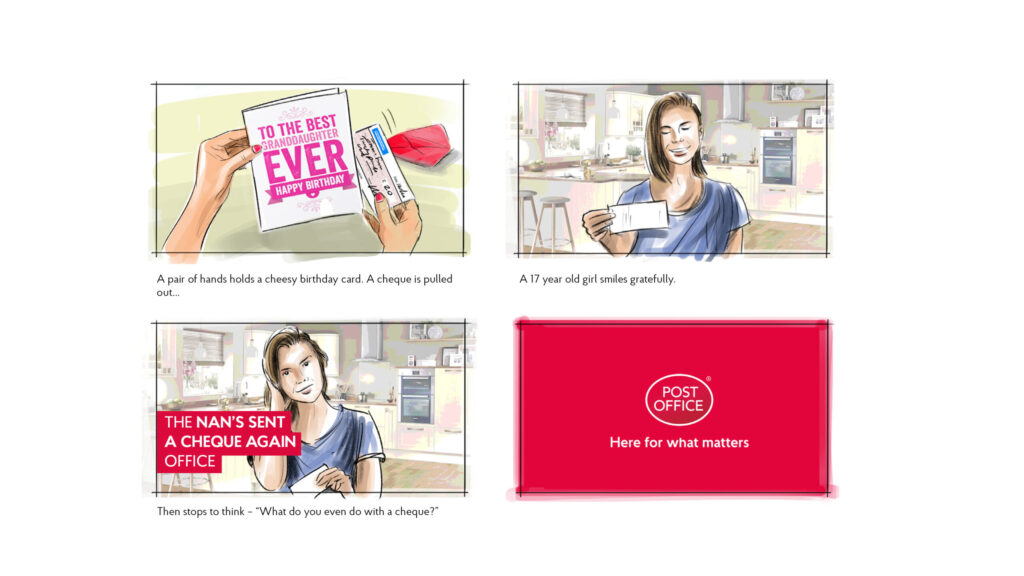
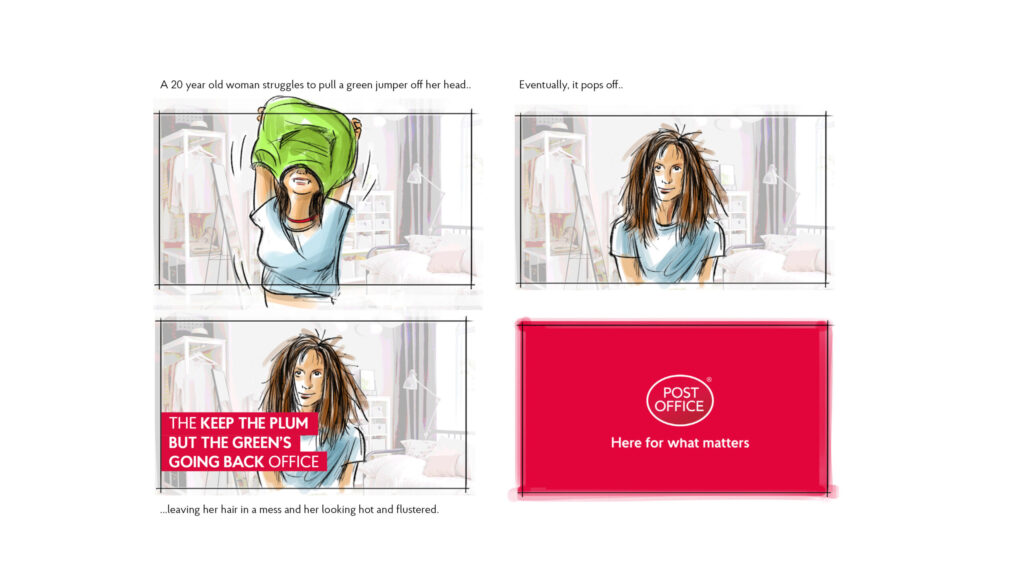
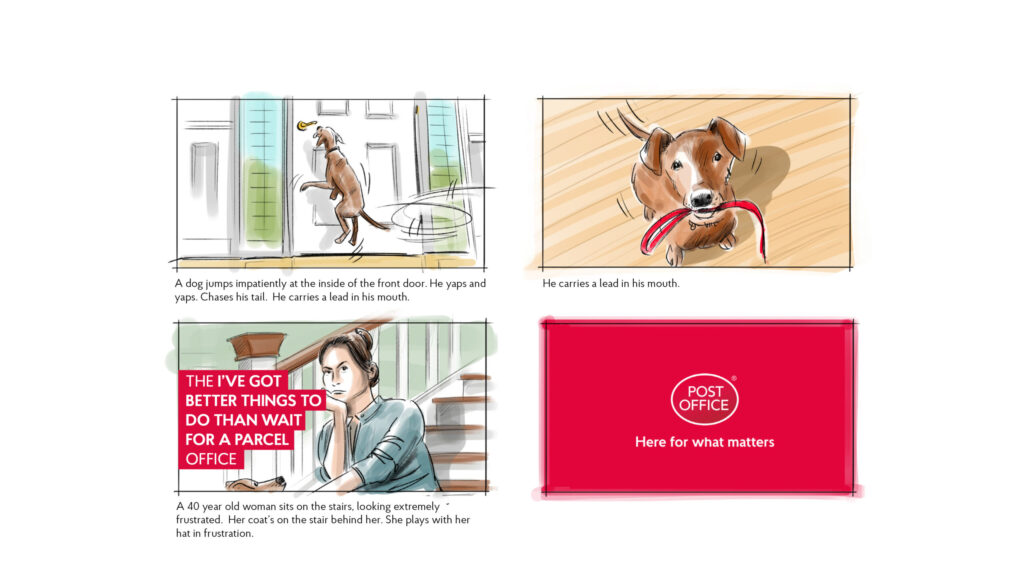
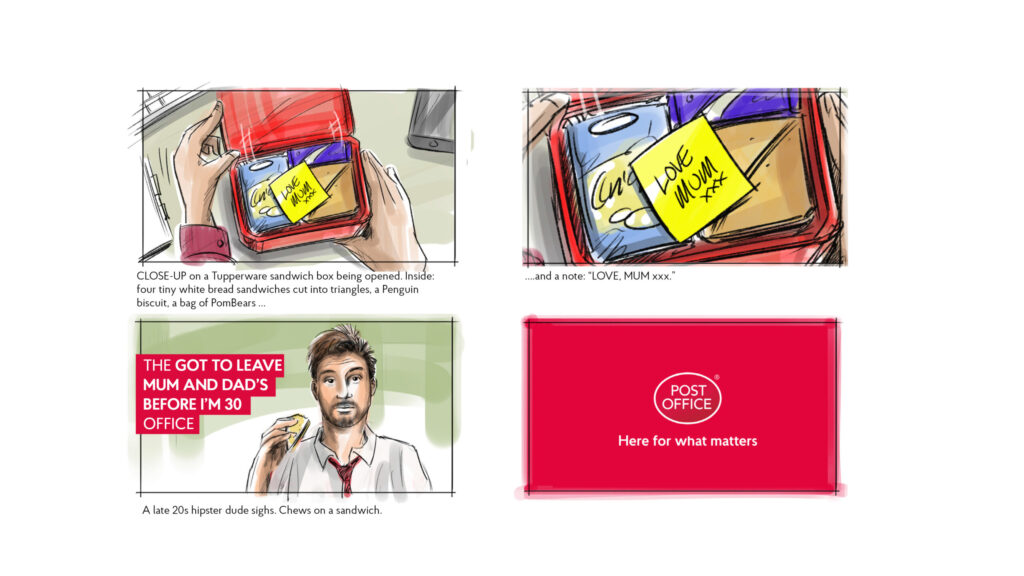
When film was brought forward into phase one of what was originally a two-part campaign, the platform needed to move quickly from static to lived moments.
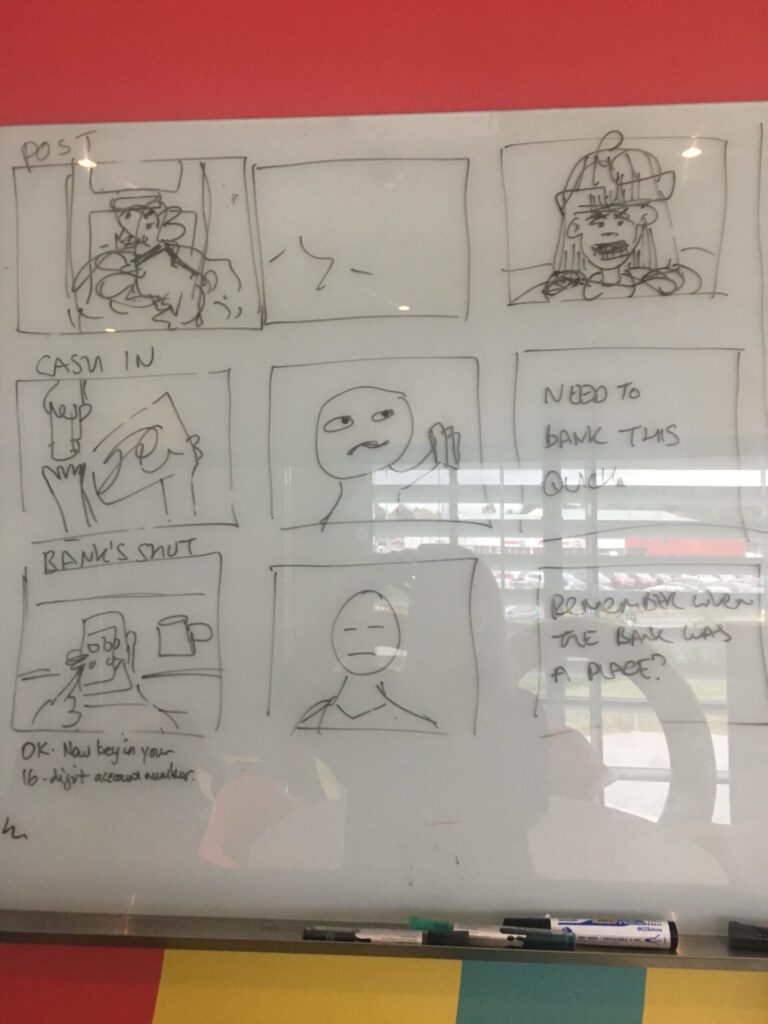
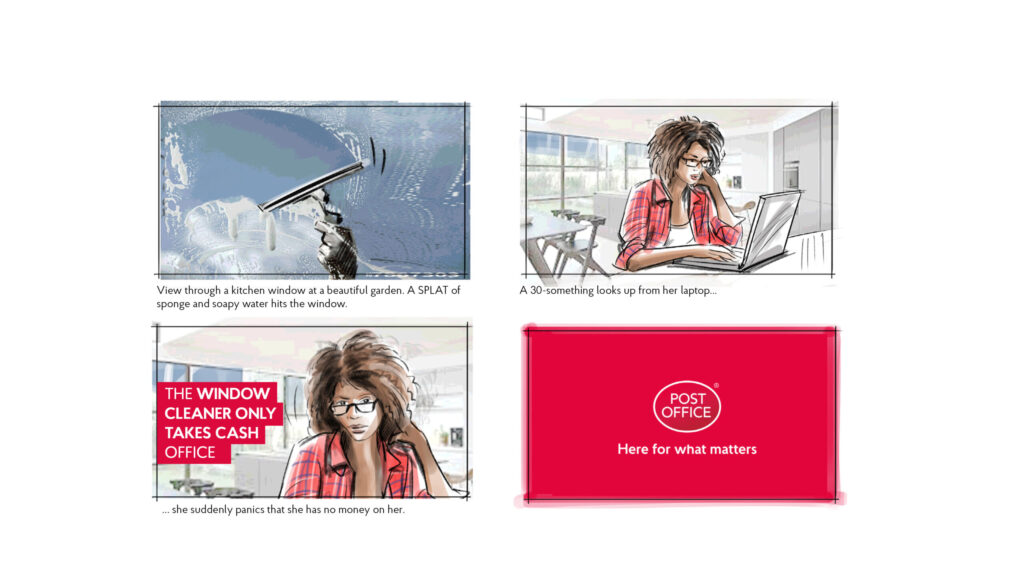
Through fast-paced, collaborative sessions, I led creative direction on the development of film scenarios, pressure-testing the idea against priority services.
Press • Radio 10s & 30s • VOD 10s top & tail • Cinema 10s top & tail • Social • OLV 6s • YouTube non-skippable pre-roll • YouTube 10s in-read
Focus Group Testing
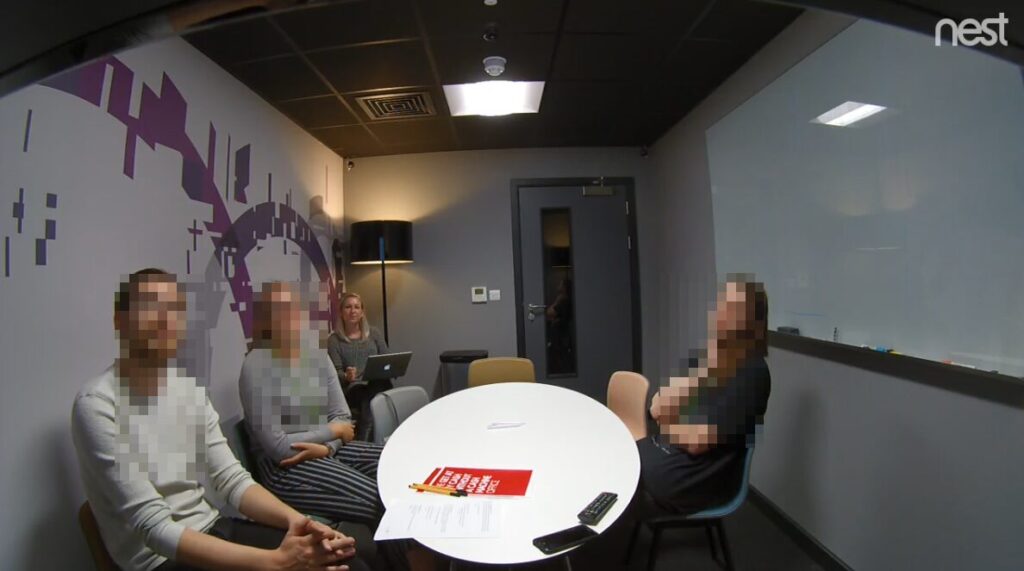
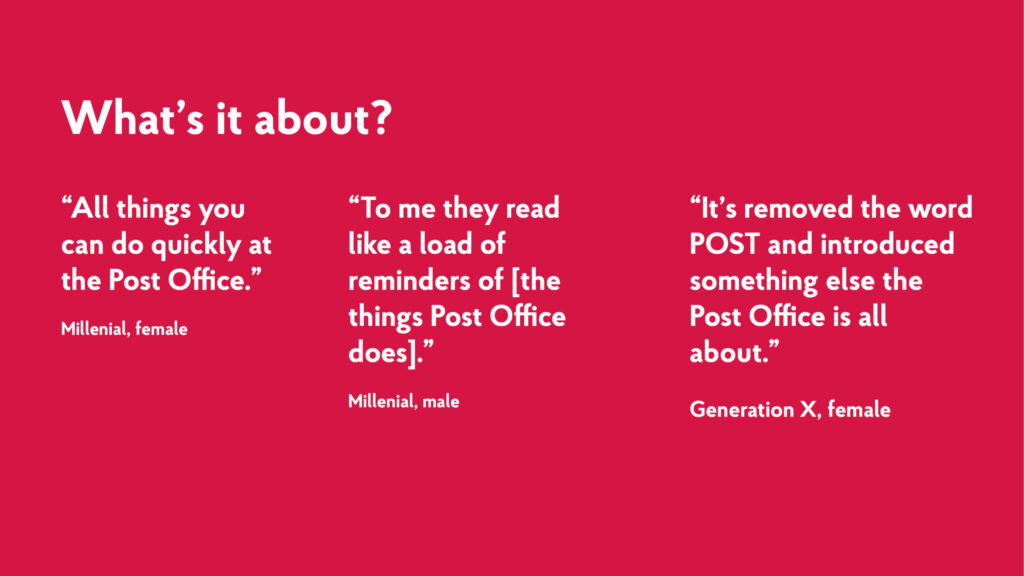
We tested with real audiences across multiple focus groups. People understood the idea immediately, with the scenarios prompting laughter and story sharing.
Four groups of 3 Millennials (18–36) • Four groups of 3 Gen X (37–54)
60–75 min sessions



The Live Campaign
The campaign delivered powerful results, running across the Midlands, London and the South East, designed to build through multiple touchpoints.
This allowed more familiar moments to land for existing audiences, while giving space for contemporary scenarios to bring new generations into the story.


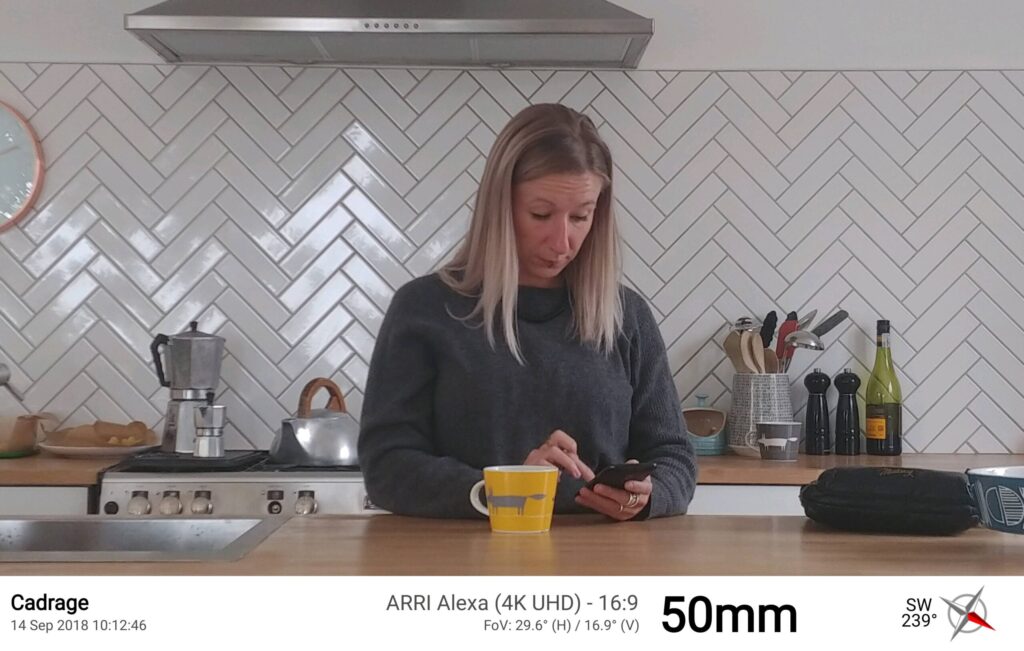
Film recce and shooting


Results you can count on
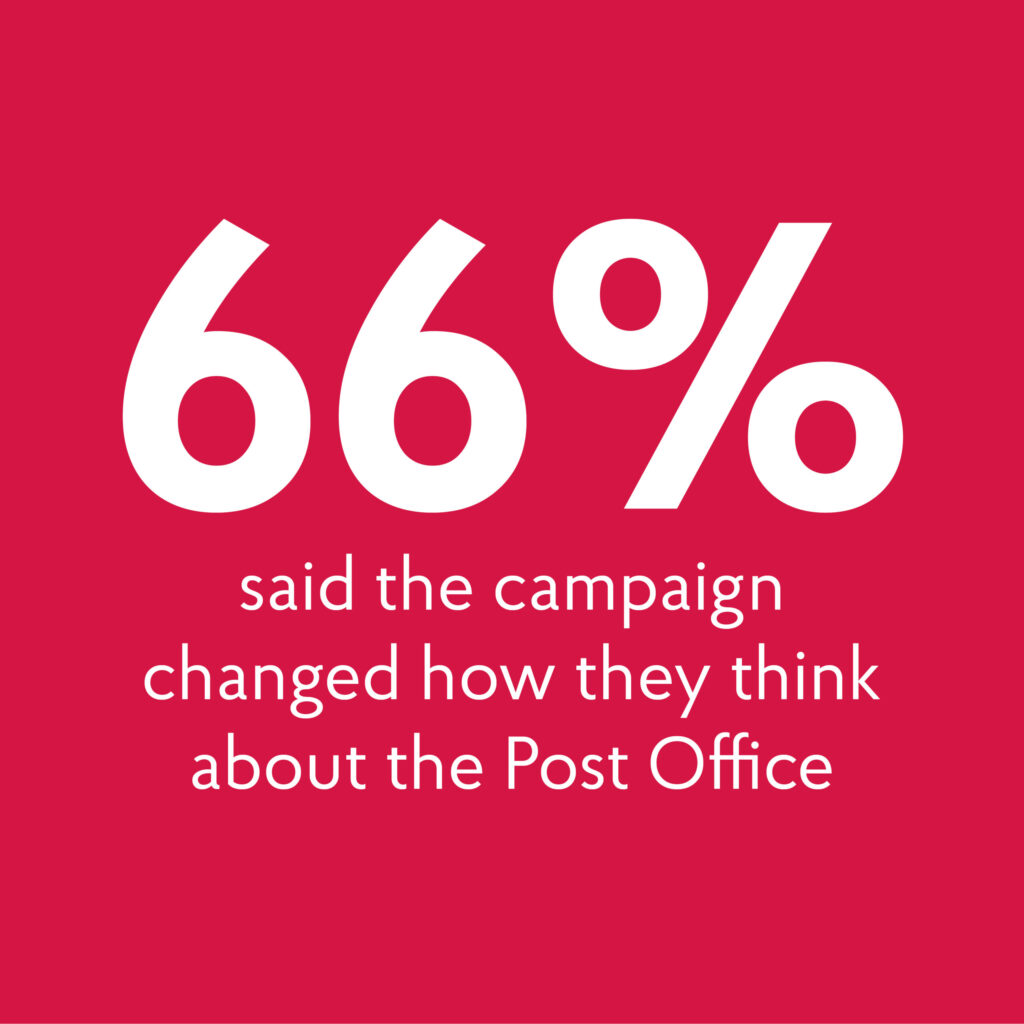
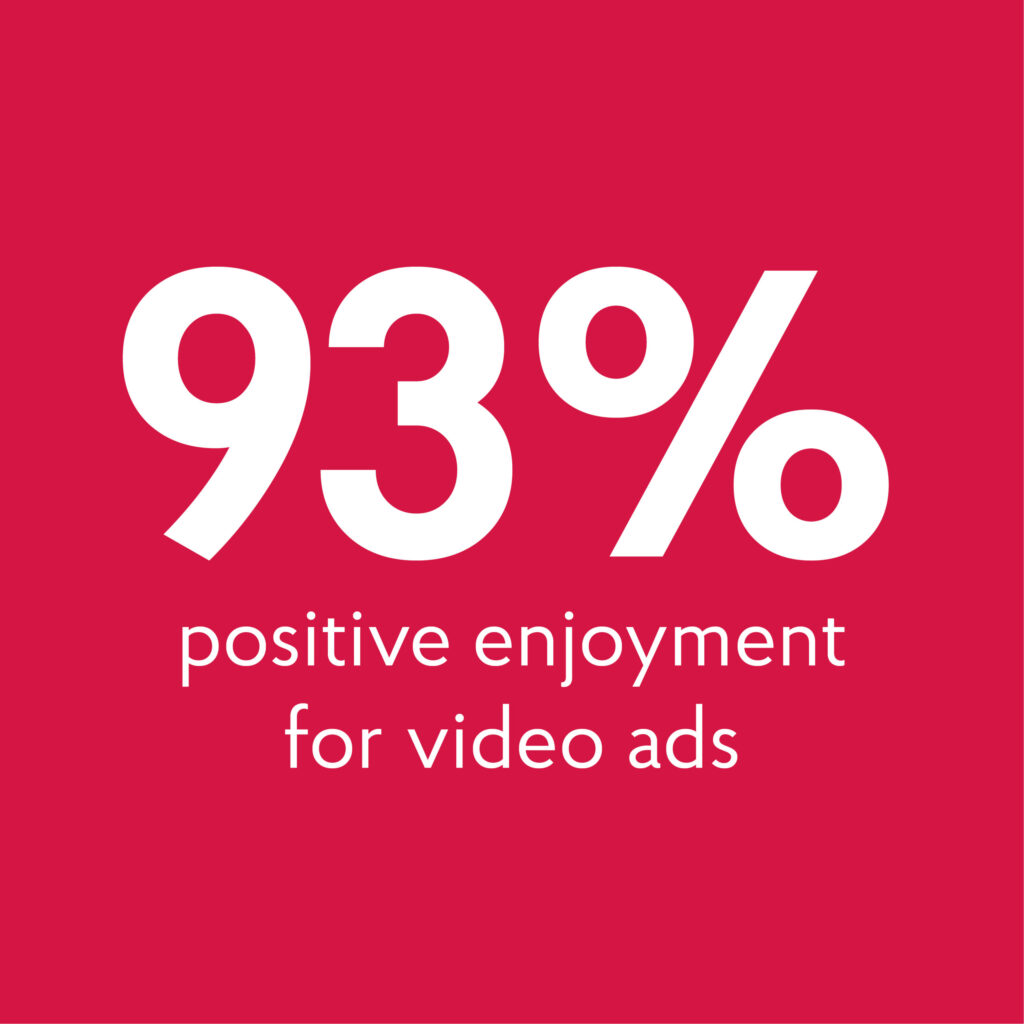
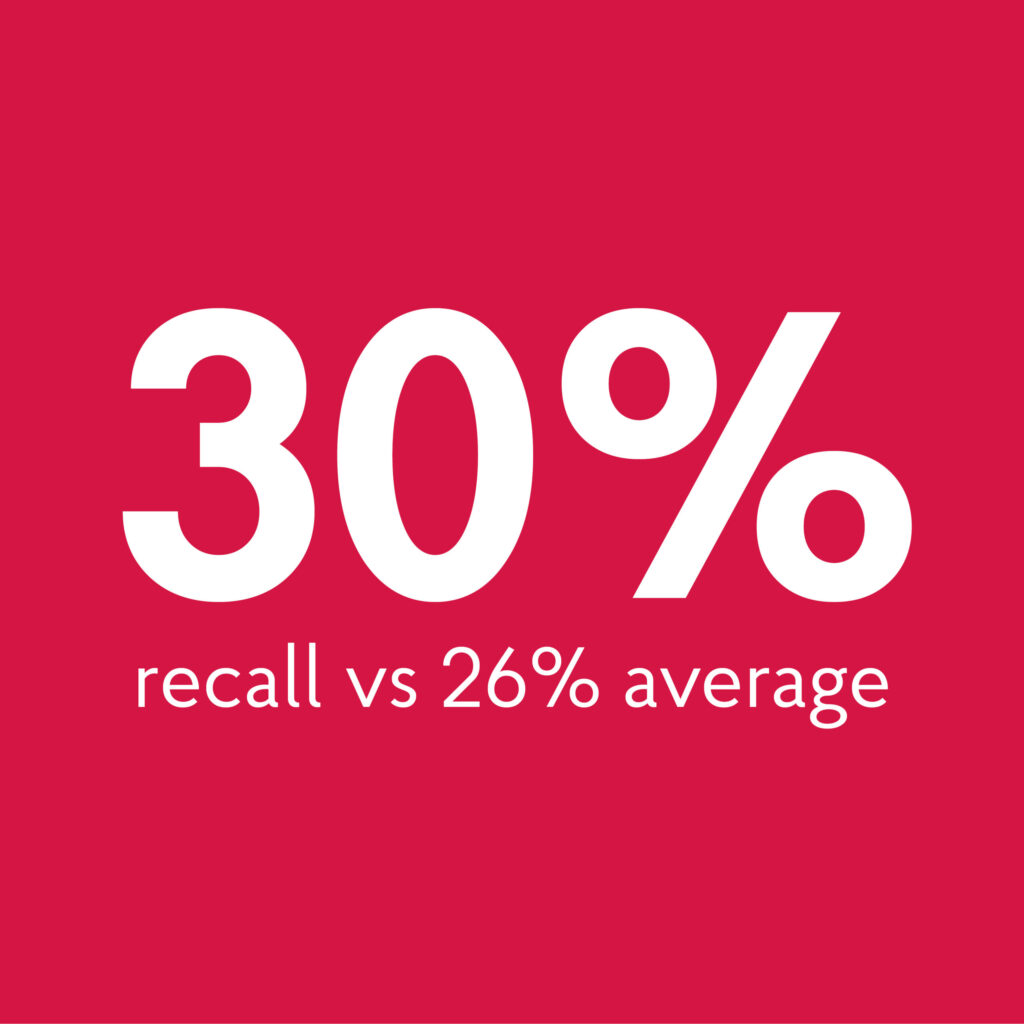
The campaign changed perceptions, increasing awareness, consideration and likelihood to use services across all regions.
Results showed meaningful movement across the funnel (from recognition through to intent), not just short-term attention.
What people said

I no longer think of post office of somewhere to buy a stamp and post a letter. I’m impressed with what it can offer in terms of services
I think I can use them for a lot more than what I thought I will go there for some of my banking needs instead of going to town
I knew the post office provide certain services at the moment but I didn’t realize quite how many more they do